By Frank Milwani
Land is the bedrock of economic security and personal identity in Kenya. Yet for landowners across the country, the threat of unlawful intrusions, boundary encroachments, and illegal squatting remains a persistent trial. When an unauthorized party steps onto, occupies, or interferes with real property, the law does not leave the rightful owner without recourse. Through a robust combination of constitutional protections, statutory provisions, and equitable remedies, Kenyan law equips property owners with potent legal mechanisms to defend their rights.
- Trespass: The Unlawful Intrusion
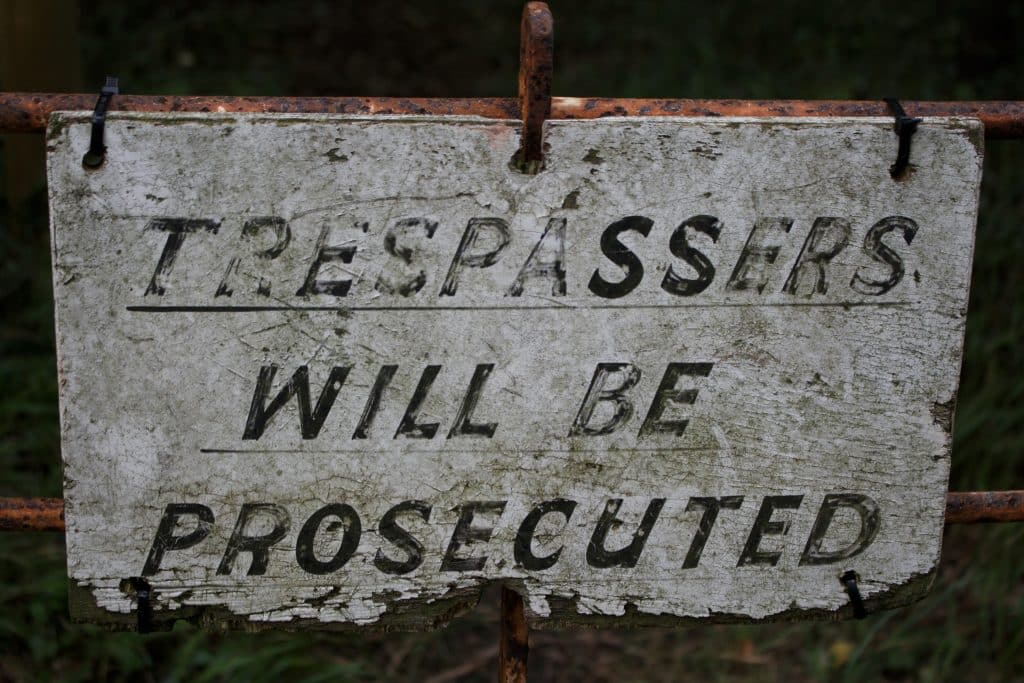
At common law and under Kenyan jurisprudence, trespass to land is defined as an intentional, direct, and unlawful interference with property in another person’s lawful possession. Notably, the claimant need not prove actual financial damage to succeed—the simple act of unauthorized entry completes the civil wrong (actionable per se).
While trespass can take various forms—such as trespass to person (assault or false imprisonment) or trespass to chattels (interference with movable property)—trespass to land focuses squarely on real property. It encompasses an array of intrusive acts, from crossing boundaries without permission to erecting structures, dumping materials, or cultivating another’s soil.
The Doctrine of the Continuing Tort
A common defense mounted by long-term trespassers is the limitation of time, with defendants asserting that an entry originating years prior renders a suit time-barred. Kenyan courts have consistently rejected this defense.
Under established land jurisprudence, an ongoing illegal occupation constitutes a continuing tort. Every single day a trespasser remains on private land without valid legal title generates a fresh cause of action. As articulated by the Environment and Land Court in Oingo v. Wakasiaka [2017] eKLR, a continuing trespass cannot be defeated by time-bar provisions under the Limitation of Actions Act, nor can an illegal occupant invoke res judicata to lock out the legitimate proprietor.
Statutory Foundations
The civil action for trespass rests upon a firm statutory framework:
- Article 40 of the Constitution of Kenya, 2010: Guarantees the right to acquire and own property. Crucially, Article 40(6) explicitly denies constitutional protection to property acquired unlawfully.
- Section 26 of the Land Registration Act, 2012: Mandates that a certificate of title serves as conclusive evidence of ownership, vesting in the registered proprietor absolute possessory rights against unlawful intruders, save where title was acquired through fraud or illegality.
- The Trespass Act (Cap. 294): Complements civil remedies by criminalizing unauthorized entry onto private property without a reasonable excuse.
- Mesne Profits: Reclaiming Lost Economic Returns
Securing an order to evict a trespasser resolves only one side of the ledger. During the period of wrongful occupation, the owner is denied the economic fruits of their land—be it rental income, agricultural yields, or commercial revenue. To address this financial injury, Kenyan law provides for mesne profits.
Defining the Remedy
Section 2 of the Civil Procedure Act (Cap. 21) defines mesne profits as those profits which the person in wrongful possession actually received, or with ordinary diligence might have received, together with interest. It explicitly excludes any value added by improvements made by the occupier.
In essence, mesne profits represent the reasonable market value of the land’s use and occupation throughout the duration of the unlawful stay.
The Evidential Trap
While mesne profits serve to restore the owner financially, courts strictly enforce the rule that mesne profits are special damages: they must be specifically pleaded and strictly proved. Merely asserting that a defendant occupied land for several years will not yield a monetary award.
- In Attorney General v. Halal Meat Products Limited [2016] eKLR, the Court of Appeal reaffirmed that a party wrongfully deprived of real property is entitled to mesne profits as compensation for lost utility during the occupation.
- However, the evidentiary threshold remains high. In Harcharan Singh Sehmi & Another v. Tarabana Co. Ltd & 5 Others [2023] KESC (eKLR), the Supreme Court illustrated the strict nature of this requirement: claims for mesne profits will fail—even where trespass is plainly established—if the plaintiff omits credible market evidence, such as a formal valuation report establishing lost rental value.
- Permanent Injunctions: Securing Finality
While damages and mesne profits remedy past injuries, a permanent injunction shields the property owner against future violations.
Issued at the conclusion of a full trial, a permanent injunction is a final court decree that perpetually restrains the defendant, their agents, and their successors from entering, occupying, or interfering with the plaintiff’s land.
Interlocutory vs. Permanent Relief
Unlike a temporary injunction—which is granted on a prima facie basis pending trial under the principles of Giella v. Cassman Brown & Co. Ltd [1973] EA 358—a permanent injunction requires conclusive proof of ownership and unlawful invasion during the main hearing.
The interplay of these remedies was clearly demonstrated in Waweru v. Maina [2023] KEELC 15995 (KLR), where the Environment and Land Court delivered a classic three-part decree:
- Declaration: Declaring the claimant the lawful owner and the defendant a trespasser.
- Vacant Possession: Ordering the immediate removal of the trespasser from the suit property.
- Permanent Injunction: Issuing a perpetual order restraining any future entry or interference.
Even in cases where claims for mesne profits fail for lack of valuation evidence, the permanent injunction remains available to guarantee the owner’s long-term quiet enjoyment.
Conclusion
Under Kenyan land law, trespass, mesne profits, and permanent injunctions form a comprehensive remedies package. Trespass establishes the unlawful entry and secures physical recovery of the land; mesne profits compensate the owner for economic loss during wrongful occupation; and a permanent injunction guarantees perpetual protection against future intrusion. By combining statutory rights with rigorous judicial proof, property owners can effectively defend their title and preserve the integrity of their investments.